

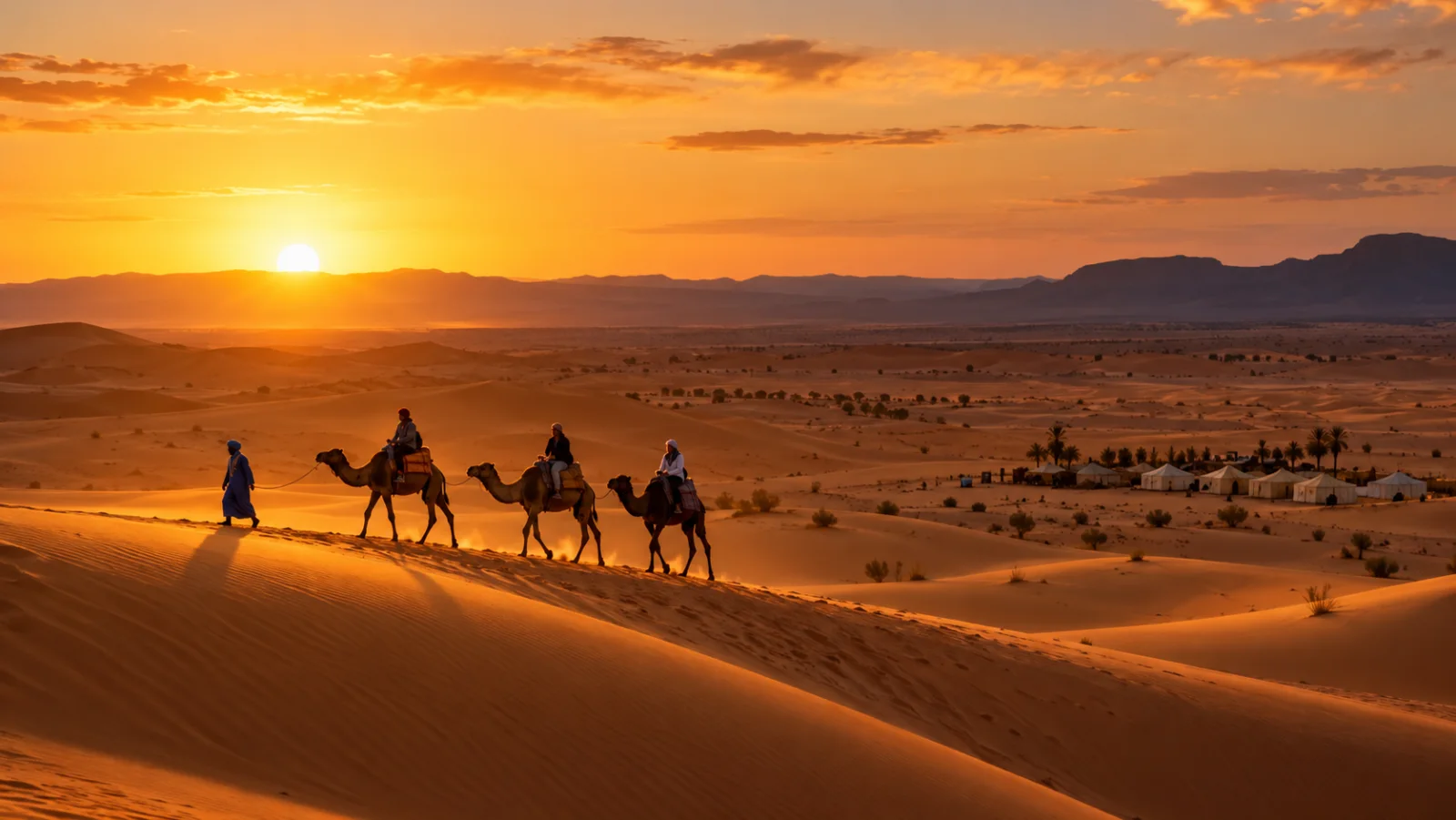
A 3-day Marrakech to Fes desert tour is one of the most rewarding ways to travel between Morocco’s two great imperial cities. Instead of taking a direct train or flight, you cross the High Atlas Mountains, explore ancient kasbahs, walk through dramatic gorges, ride into the Erg Chebbi dunes and spend a night beneath the Sahara sky.
This guide explains the classic Marrakech-to-Fes route via Ait Ben Haddou, the Dades Valley, Todra Gorge and Merzouga. It is designed for travelers who want an unforgettable desert experience without returning to Marrakech.
3-Day Marrakech to Fes Tour at a Glance
- Day 1: Marrakech → High Atlas → Ait Ben Haddou → Ouarzazate → Dades Valley
- Day 2: Dades Valley → Todra Gorge → Erfoud → Merzouga → Sahara camp
- Day 3: Merzouga → Ziz Valley → Midelt → Cedar Forest → Ifrane → Fes
- Best for: First-time visitors, couples, families and small groups
- Pace: Scenic but active, with several hours of driving each day
Why Choose a 3-Day Marrakech to Fes Desert Tour?
The route combines transportation and sightseeing in one journey. You begin among the lively streets of Marrakech and finish in the historic city of Fes, but the road between them reveals a very different side of Morocco: mountain villages, palm-filled valleys, fortified ksars and the golden dunes of Erg Chebbi.
It is especially practical if your Morocco itinerary already includes both Marrakech and Fes. You avoid backtracking while adding a genuine Sahara experience. Three days is the minimum comfortable duration for this route, so expect early starts and long—but constantly changing—landscapes.
Day 1: Marrakech to Dades Valley via Ait Ben Haddou
Your driver collects you from your accommodation in Marrakech in the morning. The journey climbs into the High Atlas Mountains, following a winding road through changing elevations, terraced hillsides and Amazigh villages. Scenic stops allow time to enjoy the mountain views and stretch your legs.
Cross the High Atlas Mountains
The Tizi n’Tichka route is part of the experience, not simply a transfer. Weather and road conditions can affect travel times, particularly in winter, so a private or small-group itinerary gives you useful flexibility.
Explore Ait Ben Haddou
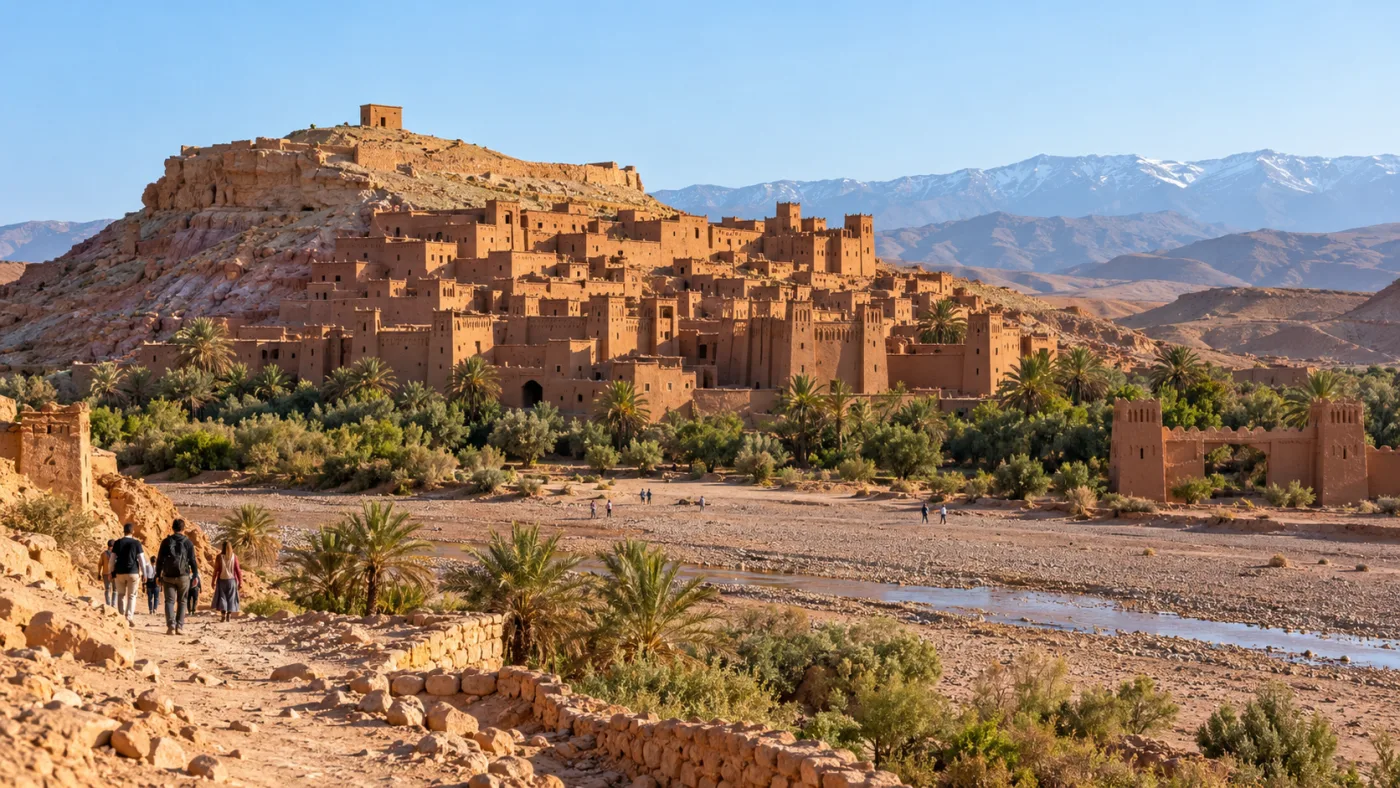
After descending toward Ouarzazate, stop at Ait Ben Haddou, the UNESCO-listed earthen ksar built on the edge of the former caravan route. Walk across the riverbed and climb through the narrow lanes for panoramic views over the valley. Allow enough time for a relaxed visit rather than treating it as a quick photo stop.
Continue through Ouarzazate and the Valley of Roses
After lunch, travel through Ouarzazate and toward the Valley of Roses. The scenery gradually changes from wide plateaus to dramatic rock formations. The first night is normally spent in or near Boumalne Dades, where dinner and a comfortable riad or hotel provide a welcome rest.
Day 1 highlights: High Atlas scenery, Tizi n’Tichka, Ait Ben Haddou, Ouarzazate and the Dades Valley.
Day 2: Dades Valley to Merzouga and the Sahara
After breakfast, follow the Road of a Thousand Kasbahs toward Tinghir and the Todra Gorge. Palm groves and adobe villages line the approach before sheer canyon walls rise on both sides of the road.
Walk through Todra Gorge
A short walk inside the gorge is a refreshing break. The cool river corridor and tall limestone walls create one of southern Morocco’s most distinctive landscapes. Comfortable footwear is useful even if you only plan a gentle stroll.
Travel through Erfoud to Merzouga
The route continues through towns such as Tinjdad and Erfoud, known as a gateway to the desert. As you approach Merzouga, one of Morocco’s gateways to the Sahara, the first dunes of Erg Chebbi appear on the horizon.
Camel trek and desert camp
Near the dunes, leave the road vehicle and prepare for a camel ride timed around sunset. The pace is slow, giving you time to watch the light change across the sand. Travelers who prefer not to ride can usually reach the camp by 4×4 when arranged in advance.
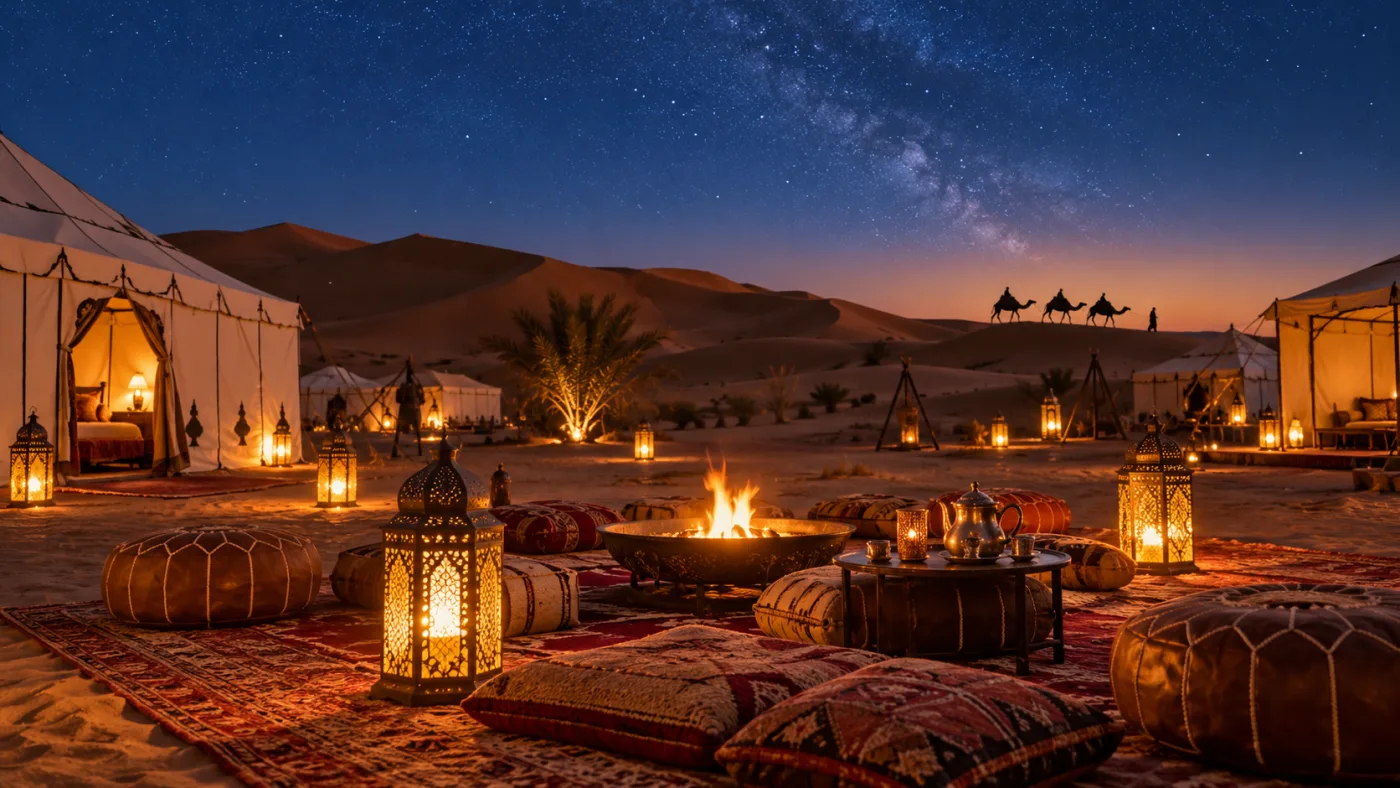
At camp, enjoy dinner and a peaceful evening in the Sahara. Depending on the accommodation level and weather, the experience may include music around the fire and time for stargazing. Ask before booking whether the tent has a private bathroom, heating or air-conditioning, as camp facilities vary.
Day 2 highlights: Dades scenery, Todra Gorge, desert towns, sunset camel trek and overnight camp at Erg Chebbi.
Day 3: Merzouga to Fes via the Ziz Valley and Middle Atlas
Wake early if you would like to see sunrise over the dunes, then return to Merzouga for breakfast and departure. This is the longest driving day, but it introduces another sequence of landscapes as you leave the Sahara and travel north.
Ziz Valley and Midelt
The road passes palm groves and viewpoints above the Ziz Valley before climbing toward the Middle Atlas. Midelt is a convenient lunch stop and a chance to break up the journey.
Cedar forests and Ifrane
Continue through the cedar-forest region near Azrou. Barbary macaques may be seen in this area, but responsible travelers should observe them from a respectful distance and avoid feeding wildlife. The route then passes Ifrane, known for its alpine-style architecture and cooler climate.
Arrival in Fes is usually in the late afternoon or evening, depending on traffic, weather and the number of stops. Your driver can drop you at an accessible meeting point near your riad or hotel; some streets inside the old medina are pedestrian-only.
Day 3 highlights: Sahara sunrise, Ziz Valley, Middle Atlas landscapes, cedar forests, Ifrane and arrival in Fes.
What Is Usually Included?
Packages differ, so always check the written inclusions before confirming. A typical private or shared Marrakech to Fes desert tour may include:
- Transport in an air-conditioned vehicle
- Professional driver or driver-guide
- Pickup in Marrakech and drop-off in Fes
- One night in the Dades Valley
- One night in a Merzouga desert camp
- Breakfasts and dinners at the overnight accommodations
- Camel ride or an arranged 4×4 transfer to camp
Lunches, drinks, entrance fees, local guides, travel insurance and tips are often separate. Ask for the exact camp category and hotel names before paying a deposit.
Private Tour or Shared Group Tour?
Choose a private tour if you want:
- Flexible photo and comfort stops
- A vehicle reserved for your party
- More control over accommodation level
- A family-friendly or personalized pace
Choose a shared tour if you want:
- A lower per-person price
- To meet other travelers
- A fixed itinerary with the main highlights
The route is long, so vehicle comfort, group size and driver quality matter as much as price.
What to Pack for the Marrakech to Fes Desert Route
- Comfortable walking shoes
- Sun protection: hat, sunglasses and sunscreen
- Refillable water bottle
- Light layers for daytime temperature changes
- Warm jacket for desert evenings, especially from late autumn to early spring
- Small overnight bag that is easy to take to camp
- Power bank and camera protection from sand
- Personal medication and travel insurance details
Large luggage can normally remain in the vehicle or be transferred separately, but confirm the arrangement with your operator.
Best Time for a Marrakech to Fes Desert Tour
Spring and autumn generally offer the most comfortable daytime temperatures. Winter can bring cold nights in the desert and possible mountain weather, while summer afternoons around Merzouga can be extremely hot. The tour operates in many seasons, but departure times and activities may be adjusted for safety and comfort.
Is Three Days Enough?
Yes—if you understand that this is an active one-way journey with substantial driving. Three days allows you to see the essential route and spend one night near the dunes. Travelers who prefer slower mornings, longer walks or additional cultural visits may be happier with four days.
Frequently Asked Questions
How long is the journey from Marrakech to Fes via Merzouga?
The full route covers a large part of southern and central Morocco. Driving is divided across three days, with sightseeing stops along the way. The final Merzouga-to-Fes section is normally the longest day.
Is the camel ride mandatory?
No. Many camps can arrange a 4×4 transfer for travelers who do not want to ride or who have mobility concerns. Request this before departure.
Can children join the tour?
Families can join, but parents should consider the long driving hours and desert temperatures. A private tour provides more flexibility for breaks and child seats.
Where does the tour finish in Fes?
Drop-off is typically at your hotel, riad or the nearest vehicle-accessible point. Confirm the exact location when booking, especially if your riad is deep inside the medina.
What is the difference between Merzouga and the Sahara?
Merzouga is the village beside Erg Chebbi, one of Morocco’s major dune areas. It is the departure point for camel rides, 4×4 transfers and desert camps.
Plan Your Marrakech to Fes Desert Journey
Tell Morocco Legacy Travels your travel dates, group size and preferred comfort level. We can help shape a private route with the right vehicle, accommodation and desert-camp experience for your trip.
Want to know more about the people behind your journey? Visit About Morocco Legacy Travels before planning your Morocco adventure.